Tour Description

Peru – A Global Hotspot for Bird Diversity

Peru is one of the world’s most megadiverse countries, located in South America and renowned as the home of Machu Picchu and vast areas of the Amazon rainforest. Its extraordinary geography includes coastal deserts, Andean highlands, cloud forests, and lowland Amazonia, creating an exceptional variety of ecosystems within a single country.

Peru contains 84 of the world’s 117 life zones, and its territory is traditionally divided into three major natural regions: the coast (11% of the country), the Andes or Sierra (30%), and the Amazon rainforest, which covers the remaining 59%. For this reason, Peru is truly an Amazonian country.

Nature-based tourism and ecotourism activities, especially birdwatching, have grown steadily in Peru at local, national, and international levels. The country’s extensive network of state-protected natural areas offers outstanding opportunities for observing birds and wildlife in well-preserved habitats.

Peru is home to approximately 1919 bird species (SACC checklist), meaning that a single trip can yield more bird species than all of North America and Europe combined. It is also a global center of avian endemism, hosting numerous endemic species and hundreds of recognized subspecies across diverse regions.

Our Peruvian tour leader is an experienced birding guide and accredited naturalist, ensuring that your journey through this varied and beautiful landscape delivers an exceptional birding and wildlife experience.

Duration

08 Days / 07 nights

Difficulty

Moderate

Max Altitude

From 3,500 m / 11,482 ft to 230 m / 754 ft

Tour Type

Nature

Traveler Recommendations

Trip Grade: Gentle Hikes - You should be prepared for certain travel factors in Peru; one of the most important is elevation. Cusco is located at approximately 3,399 meters (11,152 feet) above sea level. During the trip, we will experience significant changes in elevation and climate, so it is important to be prepared to adjust clothing accordingly.

Insurance: We strongly advise that your travel insurance policy includes medical assistance and evacuation coverage. We believe that it is always “better to be safe than sorry.” If you choose not to obtain such coverage, please note that we cannot accept responsibility for any medical or evacuation expenses incurred while traveling with us.

Accommodations It is our policy to use the best available accommodation in each location. All hotels and lodges selected for our tours are government-approved and officially registered with the Peruvian tourism authorities

Clothing: This trip departs in April, which is generally a dry and cool time of year; however, occasional light rain or damp conditions may occur. Evenings can be cool, and early morning departures are common, so warm clothing is essential. We strongly recommend dressing in layers rather than relying on a single bulky garment, as this allows you to adapt comfortably to changing temperatures and elevations. Sun protection is also important: a wide-brimmed hat and neck protection are essential. Temperatures can drop quickly in the early mornings, evenings, and at higher elevations, making layered clothing the key to staying comfortable throughout the journey.

Your clothing checklist for this trip includes walking boots for hiking and comfortable shoes for camp. You should bring a waterproof jacket and fabric waterproof over-trousers, both preferably made with breathable, waterproof fabric. For colder evenings and mornings, or in case of a cold snap, a lightweight down jacket and trekking trousers are recommended. The list also includes T-shirts or undershirts, along with long-sleeved shirts to prevent sunburn and protect against biting insects during the day. Additionally, pack thermal underwear, which you may like to change into in the evening or use for sleep, as well as micro-fleece items like a warm thick jacket and socks. Finally, don't forget a sun hat with adequate protection for your neck and smart/casual clothes for air travel.

Detailed Itinerary

01 DAY 01.- CUSCO TO MANU ROAD (HIGH ANDES TO CLOUD FOREST)-COCK OF THE ROCK
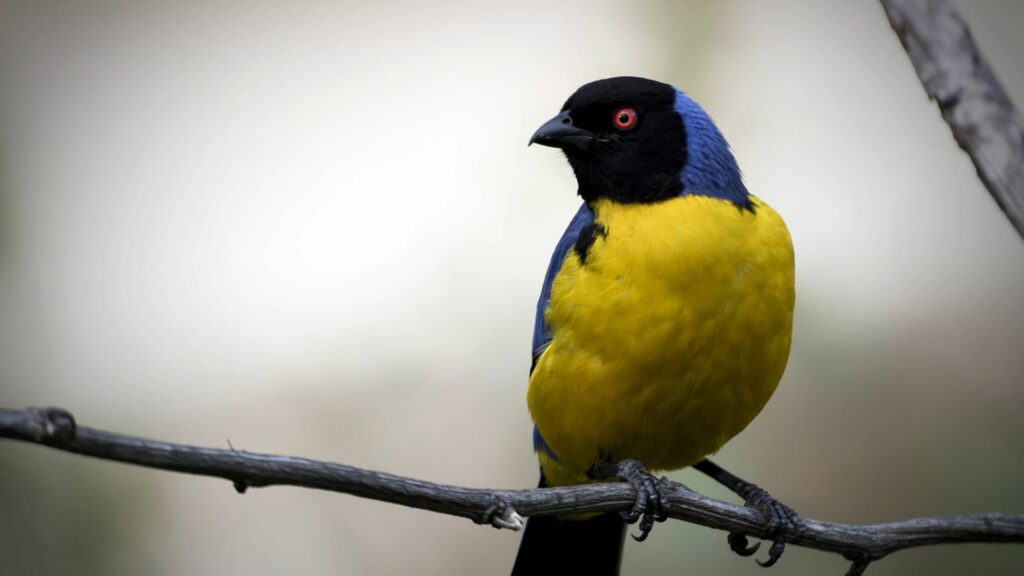
To truly appreciate the contrast between ecosystems in southern Peru, one must travel across them. This specialized birdwatching tour begins just outside Cusco, where we leave the city behind and enter a high-Andean landscape rich in birdlife. Our first birding stop is at a Ramsar-designated wetland, internationally recognized for its importance as a refuge for waterbirds. Here, we may observe several species of Andean ducks, including Puna Teal, Yellow-billed Teal, Yellow-billed Pintail, Cinnamon Teal, and the Andean Duck. The reed beds surrounding the lake provide habitat for secretive species such as Many-colored Rush-Tyrant, Wren-like Rushbird, Yellow-winged Blackbird, and Plumbeous Rail. The surrounding high-Andean vegetation offers excellent opportunities to find local and regional specialties, including White-crested Elaenia (southern form), Giant Hummingbird, Black-throated Flowerpiercer, Blue-and-yellow Tanager, Streak-fronted Thornbird (restricted to southern Peru and parts of Bolivia), Hooded Siskin, Yellow-billed Tit-Tyrant, Golden-billed Saltator, and occasionally Great Horned Owl and Spot-billed Ground-Tyrant. As we continue along the route, we make strategic birding stops across a remarkable altitudinal gradient. The landscape gradually changes from open high-Andean terrain to the montane and cloud forests of the famous Manu Road, one of the most productive birding routes in the world. Along the way, possible sightings include American Kestrel, Variable Hawk, and with luck, the elegant Aplomado Falcon. In the cloud forest, we search for species such as Creamy-crested Spinetail, Scarlet-bellied Mountain-Tanager, Hooded Mountain-Tanager, Great Thrush, Crimson-mantled Woodpecker, Golden-headed Quetzal. This area also offers chances to encounter some of the largest raptors of the Andean cloud forest, including Solitary Eagle and Black-and-chestnut Eagle. We arrive in the late afternoon at Cock-of-the-Rock Lodge, where the sounds of the forest announce the beginning of our Amazonian birding adventure.
02 DAY 02.- COCK OF THE ROCK LODGE AND SURROUNDINGS
Manu National Park is one of the most impressive ecological regions in the world, harboring over a thousand bird species across its vast territory. The famous Manu Road, which crosses the Andean cloud forest, offers spectacular birding opportunities, with vibrant colors, constant activity, and a remarkable diversity of species. One of the highlights of birding in this habitat is the presence of mixed-species flocks, a common and fascinating behavior in the cloud forest where different bird species forage together. These flocks may include birds such as Golden Tanager, Golden-eared Tanager, Silver-beaked Tanager, Paradise Tanager, Bay-headed Tanager, Blue-necked Tanager, Spotted Tanager, Versicolored Barbet, Yellow-throated Chlorospingus, Yellow-throated Tanager, Orange-eared Tanager, Montane Foliage-gleaner, and Yellow-rumped Antwren, among others. Another particularly diverse and exciting group in this region is the hummingbirds. Scientific studies suggest that hummingbirds originally diversified in cloud forest environments, and this area showcases an exceptional variety. Species we may encounter include Violet-fronted Brilliant, Many-spotted Hummingbird, Sparkling Violetear (a seasonal migrant), Green Hermit, White-bellied Woodstar, Rufous-Booted Racket-tail, Wire-crested Thorntail, and Bronzy Inca, among others. A major highlight of the day is the opportunity to observe the Andean Cock-of-the-rock, Peru’s national bird and one of the most iconic species of the Neotropics. This remarkable bird is famous for its unique courtship behavior. Males gather at a traditional display site known as a lek, where they sing, call, and perform elaborate dances to attract visiting females. We will visit one of these leks to witness this extraordinary natural spectacle—an unforgettable experience and a true highlight of birdwatching in Manu.
03 DAY 03.- MANU ROAD –BIO-MANU LODGE (lower Manu-road)
As we continue descending, this section of the route becomes especially interesting due to the change in altitude and environmental temperature, which introduces a new set of bird species. Birds that were scarce or absent at higher elevations become increasingly frequent and common, including Russet-backed Oropendola, Blue-headed Parrot, Chestnut-fronted Macaw, and Tropical Kingbird. Mixed-species flocks remain a key feature at this elevation and often bring pleasant surprises, significantly expanding our checklist. Species we may encounter include Blue Dacnis, Blue-necked Tanager, Black-faced Dacnis, Black-fronted Nunbird, Long-tailed Tyrant, Plumbeous Kite (migrant), Black-throated Antbird, Golden-bellied Warbler, and Bluish-fronted Jacamar, among others. Gradually, we leave the cloud forest behind and enter a fascinating ecotone, where elements of the cloud forest and lowland Amazon rainforest overlap. This transition zone supports a rich and diverse avifauna and is where our next lodge is located, at approximately 750  meters above sea level. In this area, we enjoy birdwatching focused on a remarkable diversity of hummingbirds, including Golden-tailed Sapphire, Great-breasted Sabrewing, White-necked Jacobin, Gould’s Jewelfront, and Rufous-crested Coquette. There is also an excellent chance to observe the endemic Koepcke’s Hermit, a highly sought-after species for birders visiting southern Peru.
04 DAY 04 – BIRDING AT THE HUMMINGBIRD GARDENS AND LODGE SURROUNDINGS
We begin the day early in the morning, heading to Pico de Hoz Hummingbird Garden, a well-known site with an excellent record of hummingbirds and other bird species that regularly visit the area. Here we may observe species such as Fork-tailed Woodnymph, Gray-breasted Sabrewing, White-necked Jacobin, and Golden-tailed Sapphire. There is also a good chance to see some of the smaller and more delicate species, including Rufous-crested Coquette, Blue-tailed Emerald, and Violet-headed Hummingbird, among others. The surrounding bamboo forest adds another layer of bird diversity, hosting a variety of antbirds and forest specialists. Possible species in this habitat include White-browed Antbird, Bluish-slate Antshrike, Pygmy Antwren, Gray Antwren, Dot-winged Antwren, Bamboo Antshrike, Great Antshrike, Gray Antbird, and Chestnut-tailed Antbird. Additional species that may be encountered in the lodge surroundings include Blue-headed Parrot, Blue-headed Macaw, Chestnut-fronted Macaw, White-winged Becard, Yellow-crowned Tyrannulet, Gray-crowned Flycatcher, and Black-tailed Trogon, among others. In the evening, we take advantage of excellent nocturnal birding opportunities. With some luck, we may encounter species such as Tawny-bellied Screech-Owl, Great Potoo, Black-banded Owl, and Mottled Owl, making for an exciting end to the day.
05 DAY 05.- BIO-MANU LODGE– MANU BIRDING LODGE
We depart to Manu Birding Lodge on an enjoyable and scenic journey by motorized boat, traveling downstream along the Madre de Dios River for approximately six hours. Observing wildlife from the river offers one of the best perspectives to experience the Amazon, with excellent birding opportunities along both riverbanks. During the first hours of the journey, when the river flows more swiftly, we have an excellent chance to observe the Fasciated Tiger-Heron, a species typically found in faster-flowing sections of the river. Other waterbirds commonly seen include Cocoi Heron, Capped Heron, Snowy Egret, and Roseate Spoonbill. As the river gradually widens and the current slows, the diversity of riverine birds increases. This section offers opportunities to spot Black Skimmer, Yellow-billed Tern, Large-billed Tern, Ringed Kingfisher, and Amazon Kingfisher, as well as colorful macaws such as Red-and-green Macaw and Blue-and-yellow Macaw. Raptors are also frequently seen soaring overhead, including Roadside Hawk, Zone-tailed Hawk, Great Black Hawk, and Osprey, adding excitement to the river journey. We arrive at Manu Birding Lodge in the afternoon, where we enjoy a delicious dinner and a well-deserved rest after a rewarding day of river birding.
06 DAY 06.- MANU BIRDING LODGE – BLAQUILLO CLAY LICK – MANU BIRDING LODGE
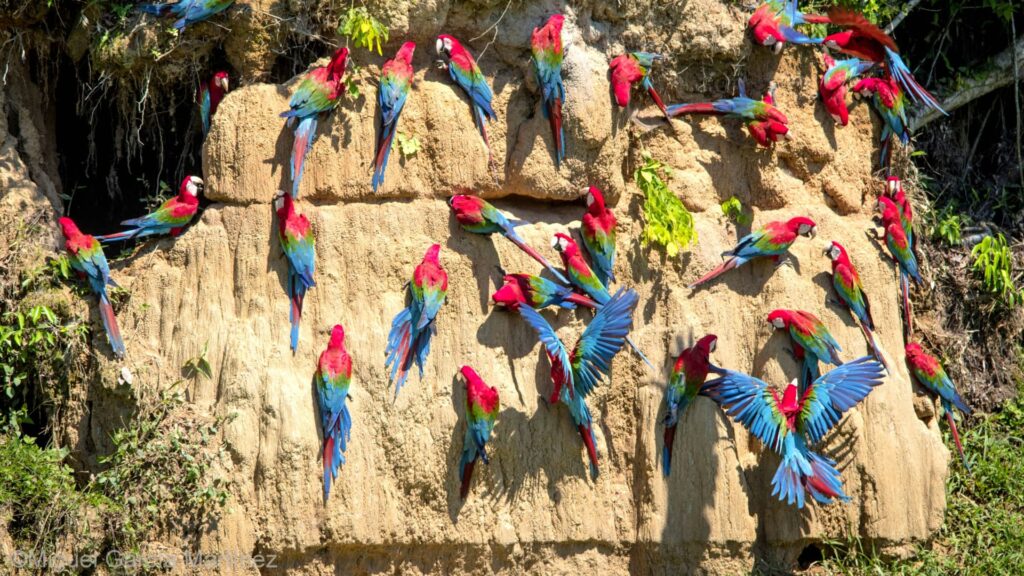
Some birders have a special fascination with macaws, perhaps because of their striking plumage, complex social behavior, or their well-known monogamous bonds. Parrots (Psittacidae) are distributed across much of the world, but one of their most extraordinary behaviors—gathering at clay licks to consume mineral-rich soil—occurs in spectacular fashion in the southern Peruvian Amazon. Here, at the famous Blanquillo Clay Lick, large numbers of parrots and macaws congregate in a breathtaking and colorful display. This is one of the few places where the largest macaws of the Peruvian Amazon, especially the Red-and-green Macaw, descend in great numbers to feed on the clay. Early this morning, we travel by motorized boat for approximately 45 minutes downstream to reach the Blanquillo Clay Lick. From the riverbank, we walk for about 30 minutes to a well-positioned observation hide, where we witness the first parrots arriving at the clay wall to obtain essential minerals that aid digestion. Species commonly observed include Mealy Parrot, Blue-headed Parrot, Yellow-crowned Parrot, and Orange-cheeked Parrot, often gathering in flocks that can exceed two hundred individuals. While enjoying this remarkable natural spectacle, we also savor a delicious breakfast prepared by our cook, allowing us to remain quietly in position during peak activity. In addition to parrots and macaws, the area offers excellent opportunities to observe a variety of other bird species, such as Ringed Kingfisher, White-winged Swallow, Bank Swallow, White-banded Swallow, Gray-capped Flycatcher, White-throated Toucan, Chestnut-eared Aracari, Crimson-crested Woodpecker, Lineated Woodpecker, and Fork-tailed Palm-Swift, among others. After this unforgettable experience, we return to Manu Birding Lodge, where we continue birdwatching activities throughout the afternoon.
07 DAY 07.- MANU BIRDING LODGE – BLANCO OXBOW LAKE
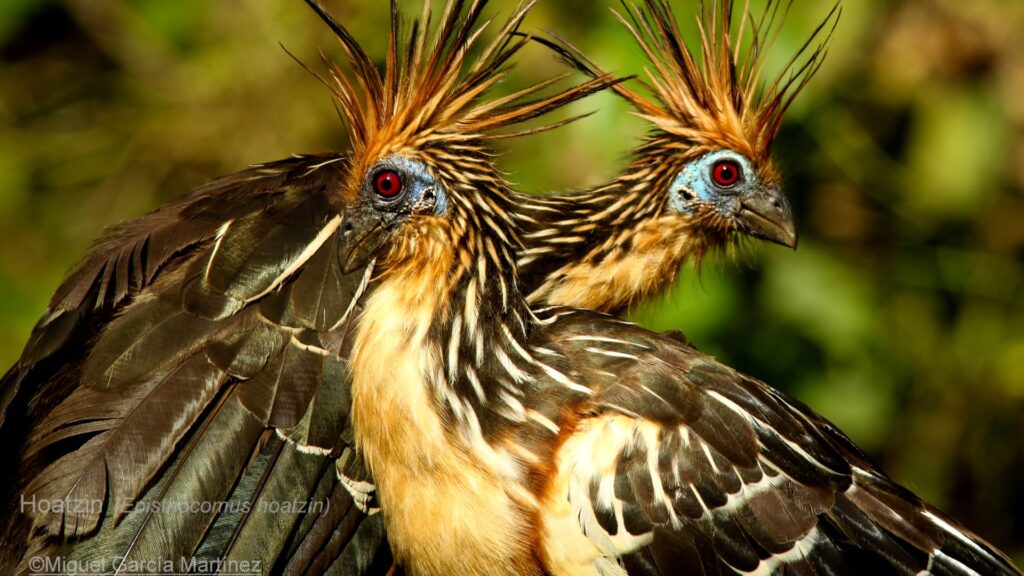
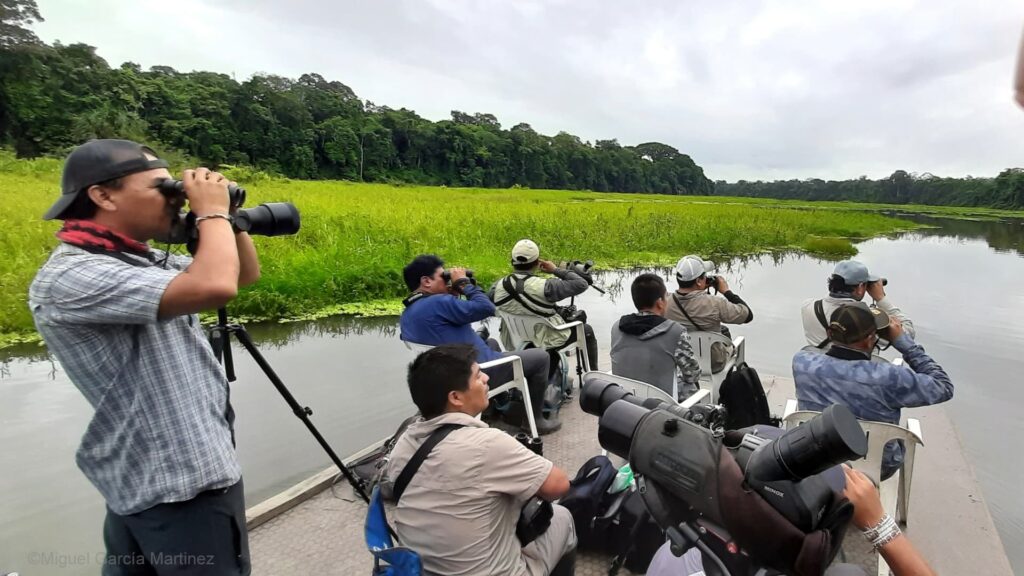
One of the richest and most productive habitats for birdwatching in the Amazon is found in meandering oxbow lakes, whose high biodiversity is a clear indicator of well-preserved, pristine rainforest. Today we visit Blanco Oxbow Lake, a classic meandering lake that supports an exceptional diversity of birdlife. We explore the lake by catamaran, allowing excellent opportunities for bird photography at close range. Species commonly observed include Hoatzin, Purus Jacamar, Little Cuckoo, Greater Ani, Black-capped Donacobius, Ringed Kingfisher, Limpkin, Purple Gallinule, Amazon Kingfisher, Wattled Jacana, Black-collared Hawk, and Ahinga, among many others. After this activity, we return to Manu Birding Lodge for lunch, followed by additional birdwatching along the lodge trail system, where forest species are regularly encountered. Later, after lunch we head to  canopy tower, which provides an elevated view of the rainforest canopy and offers excellent opportunities to observe canopy-dwelling birds. As dusk approaches, we remain alert for nocturnal species, taking advantage of the transition from day to night in the Amazon forest.
08 DAY 08.- MANU BIRDING LODGE-PUERTO MALDONADO AIRPORT-LIMA
Today, in the morning, we depart from our lodge towards Puerto Maldonado city. Our final journey will take approximately seven hours, using different means of transportation. The first stretch of the trip will be by motorized boat to Boca Colorado. During this river journey, there will still be opportunities for birdwatching from the boat, with chances to observe species such as Southern Caracara, Muscovy Duck, Black Skimmer, Yellow-billed Tern, and Large-billed Tern, among others. Boca Colorado is an area where tourism activity has largely been replaced by gold mining, and as a result, wildlife and natural vegetation are now less abundant. From Boca Colorado, we will take an express vehicle for approximately one and a half hours to Punkiri Port. From there, we will cross another river, the Inambari River, by motorized boat, before continuing with our final land transportation to Puerto Maldonado city. Upon arrival in Puerto Maldonado, you will be transferred to the airport to take your flight back to Lima, marking the end of our unforgettable Amazon birdwatching adventure.

What's Included

  • Visa and all taxes
  • Licensed Tour guide who is a specialized Birder
  • All activities mentioned in the itinerary.
  • All accommodation is based on sharing a twin room.
  • All meals.
  • Tea/coffee and snacks.
  • Bottled water throughout the trip.
  • Ground Transportation.
  • All entrance fees to parks.

Not Included

  • Domestic flight between Lima and Cusco.
  • International Flights.
  • Travel Insurance (essential)
  • Laundry, phone calls and alcoholic drinks.
  • Personal Expenses.
  • Charges incurred because of circumstances beyond the control
  • Gratuity /Tips.
 

Note Regarding single supplements

Single occupancy is available upon request, subject to room availability, with a supplement of US$ … per night.

Frequently Asked Questions

01 What kind of birds will I be able to see during the tour?

Throughout the route you will see an impressive diversity that includes everything from Andean ducks and the majestic Condor in the high zones to iconic jungle species such as the Andean Cock-of-the-rock, various types of macaws, toucans, and an enormous variety of colorful hummingbirds and tanagers.

02 Do I need to have previous birdwatching experience?

It is not a requirement to be an expert since the itinerary is designed so that both beginners and advanced observers can enjoy the experience with strategic stops at wetlands, cloud forests, and hummingbird gardens that facilitate the sighting of the most representative species.

03 What does the transportation include during the eight-day expedition?

The trip combines land transfers in private vehicles to cross the Andes and motorized boats to navigate the Madre de Dios and Inambari rivers, allowing a panoramic view of the ecosystems while we move between the different lodges and observation points.

04 What are the accommodation conditions like on the route to Manu?

During the expedition you will stay in strategically located eco-lodges such as Cock of the Rock Lodge and Bio-Manu Lodge, which are integrated into nature and offer basic comfort, full meals, and direct access to trail systems and observation towers.
05 What happens at the end of the tour in Puerto Maldonado?
On the final day we make a journey that combines river and land sections to reach the city of Puerto Maldonado, where our team will take you directly to the airport so you can catch your return flight to Lima in a punctual and safe manner.