Tour Description

One of the most impressive natural sanctuaries on the planet, Manu is located in southern Peru and stretches from the high Andean landscapes down to the heart of the Amazon rainforest, creating a unique mosaic of ecosystems. Along nearly 500 km of diverse habitats, Manu protects an extraordinary richness of flora and fauna, as well as native communities that keep their ancestral traditions alive. This privileged setting invites nature lovers and birdwatching enthusiasts to experience a truly wild adventure, where each day reveals new species, captivating sounds, and unforgettable landscapes.

Duration

7 DAYS / 6 NIGHTS

Difficulty

Moderate

Max Altitude

3,500 - 4,000 meters above sea level (m a.s.l.).

Tour Type

Nature

Traveler Recommendations

All transportation services (vehicles and boats)

All accommodation at lodges (basic but comfortable)

All meals (including mid-morning snacks)

Drinking water during the tour

Professional bilingual naturalist guide

Detailed Itinerary

01 DÍA 1: CUSCO – BAMBU LODGE
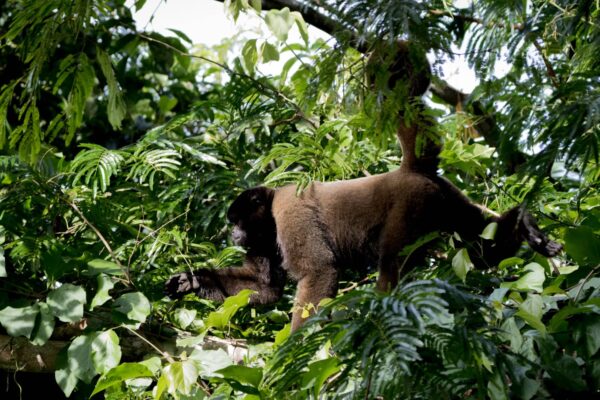
Traveling to enjoy nature is always an unforgettable adventure, and this journey takes us deep into the heart of the Amazon rainforest within Manu National Park, one of the most biodiverse places on Earth. Early in the morning, we depart from Cusco in our private vehicle, ascending through the high-Andean villages along the route. Our first stop will be the pre-Inca tombs of Ninamarka, a little-known archaeological site of great historical significance. We then continue to the picturesque town of Paucartambo, where we will enjoy breakfast and experience the traditional Andean atmosphere. From Paucartambo, we begin our descent toward the entrance of Manu National Park (Acjanaco). From this point onward, one of the most fascinating experiences of the journey begins: the gradual transition from the Andes into the Amazon. The landscape changes dramatically as we enter the cloud forest, where striking geographic contrasts and varying altitudinal levels give rise to an extraordinary diversity of flora and fauna. This habitat offers excellent opportunities for observing iconic cloud forest birds, true symbols of the region, such as the Andean Cock-of-the-rock, Golden-headed Quetzal, Masked Trogon, and Dusky-green Oropendola. With some luck, we may also encounter mixed-species flocks—natural associations of different bird species that forage and move together for protection—as well as occasional sightings of monkeys. During this first stretch, there is also the possibility of spotting Common Woolly Monkeys and Brown/Large-headed Capuchins Monkey. At the end of the day, we arrive at our first lodge, located at approximately 800 meters above sea level (2,634 feet), where a warm dinner prepared by our group’s cook awaits us, followed by a well-deserved rest surrounded by nature.
02 DÍA 2: BAMBU LODGE – BOCA MANU
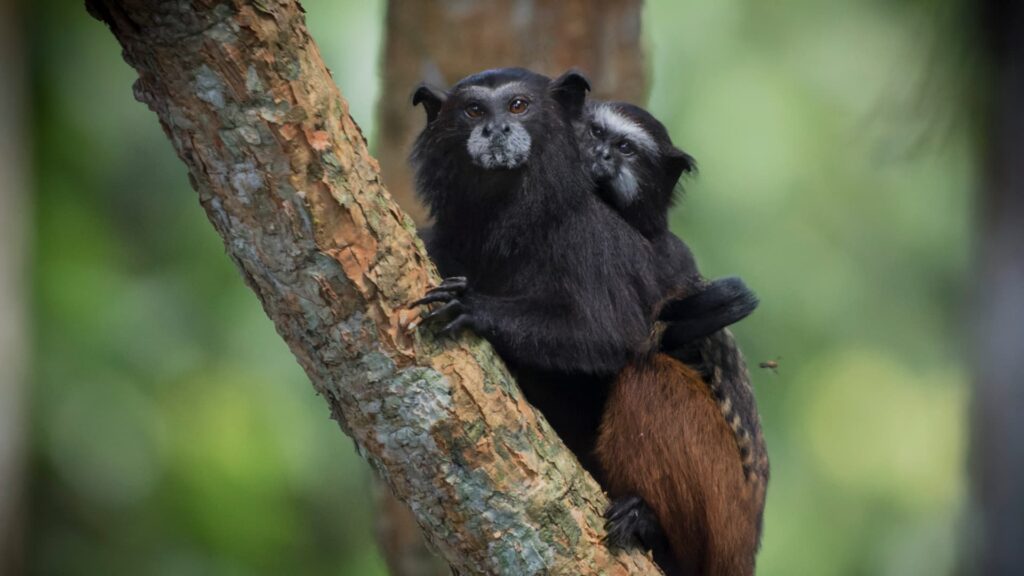
Today we will wake up to pleasant weather, accompanied by the constant songs of birds that inhabit this natural environment. After enjoying breakfast prepared according to each guest’s dietary preferences, we will pack up and continue our journey for a few more hours in our private vehicle toward Atalaya Port, located on the boundary between the Cusco and Madre de Dios regions. From this point, we begin our outboard motorboat journey along the Madre de Dios River, navigating downstream. The scenery gradually transforms: the rainforest becomes denser, the mountains slowly fade into the distance, and the boat ride itself is especially relaxing. During this river journey, we will have excellent opportunities to observe riverine birdlife, including tiger herons—found only in the upper reaches of this river—along with oropendolas flying along the riverbanks, and hawks and caracaras soaring overhead. With a bit of luck, we may also spot Capybaras, tamarin monkeys, peccaries, and other wildlife that occasionally appears along the route. The journey includes a strategic stop at a natural hot spring pool, known locally as Aguas Calientes, fed by the last foothills of the Pantiacolla mountain range, just before entering the lowland rainforest. This will be a special moment to relax and enjoy a unique gift of nature before continuing our journey to our next lodge in Boca Manu, where we will arrive at sunset for dinner and a well-deserved rest.
03 DÍA 3: BOCA MANU -CASA MACHIGUENGA (reserved zone of Manu National Park)
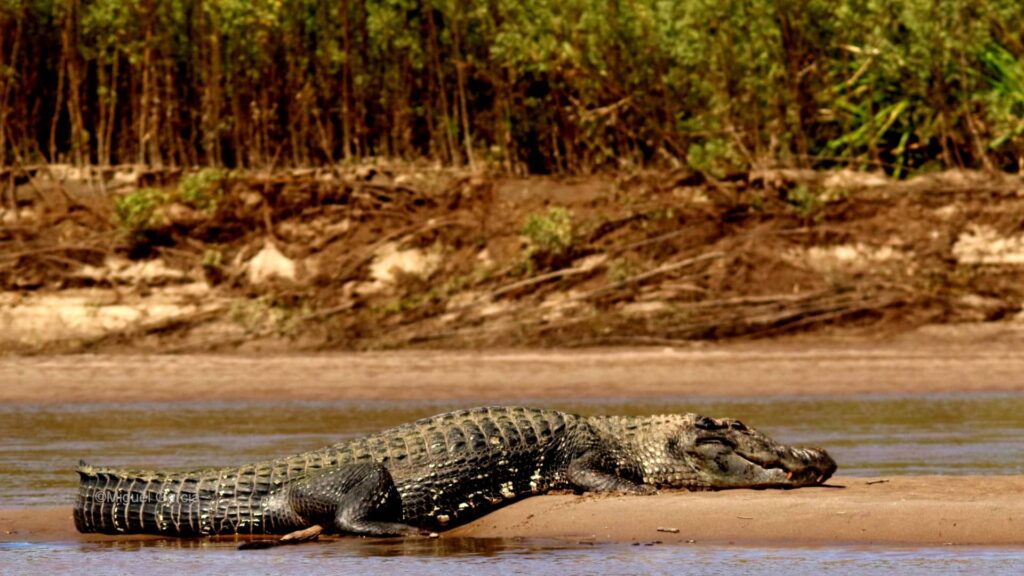
Our day will begin very early as we set off by boat toward the Limonal Ranger Station, navigating the Manu River from its confluence with the Madre de Dios River. Upon arrival, and after completing our official registration to enter the Reserved Zone, we will continue traveling upstream along the majestic Manu River. The surrounding environment is pristine primary rainforest, one of the best-preserved ecosystems in the Amazon, home to an extraordinary diversity of flora and fauna. Along this stretch, we may encounter white and black caimans, as well as several species of monkeys, including howler monkeys, spider monkeys, common squirrel monkeys, stump-tailed monkeys, and various species of capuchins. With a bit of luck, we may also spot larger mammals such as capybaras, tayras, and even jaguars, in addition to numerous yellow-spotted river turtles (taricayas) basking on the riverbanks. This section of the journey is especially thrilling due to its unpredictable nature—every bend in the river may reveal a rare or historically seldom-seen bird or mammal. It is truly an unparalleled experience for nature and wildlife enthusiasts, where immersion in the natural world reaches its fullest expression. At the end of the day, we will arrive at our lodge, known as Casa Machiguenga or Matsigenka, from where we will begin our expeditions over the following days along the trails of the pristine rainforest within Manu National Park.
04 DÍA 4: CASA MACHIGUENGA- LAGO SALVADOR – SENDEROS
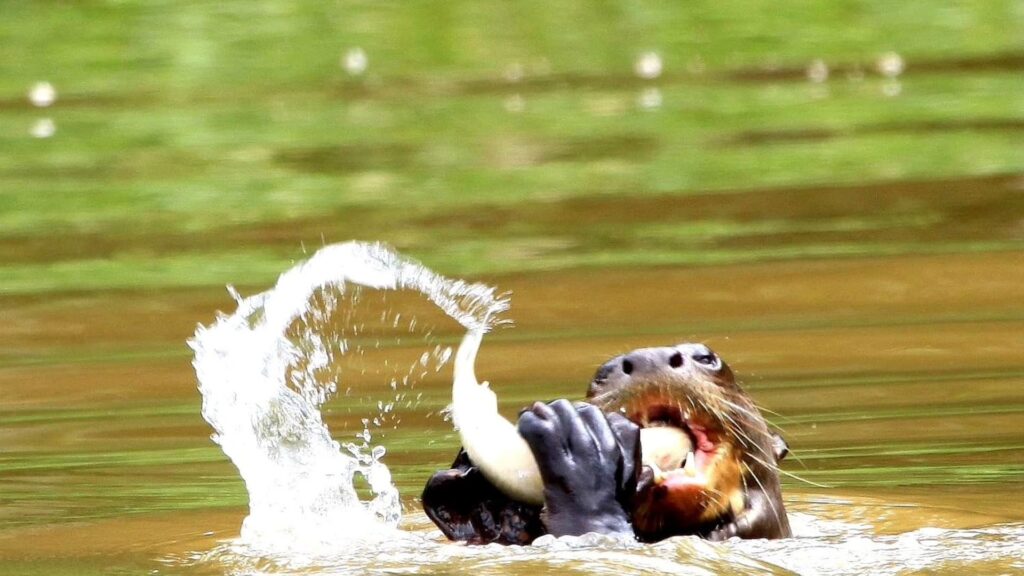
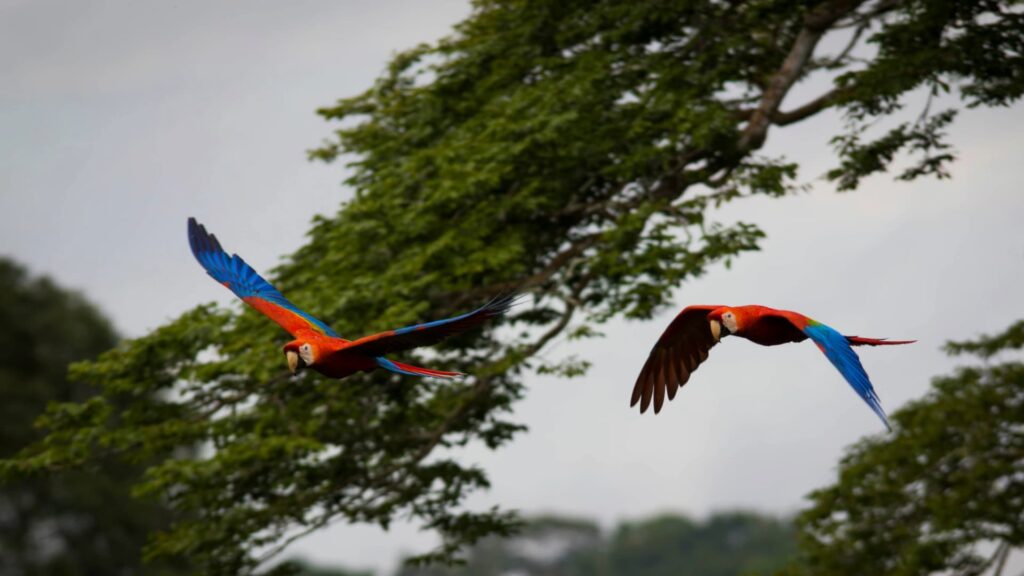
Waking up in such a magical place fills us with anticipation. Our day will begin early and, after enjoying breakfast, we will head toward Salvador Lake, home to the Giant Otter, a species currently considered endangered. This lake also serves as a refuge for numerous species that gather around the water—both predators and prey—making it a privileged setting for wildlife observation. During our navigation, we will record an impressive diversity of birdlife, whose calls blend together to form a true natural symphony. Soaring over the lake, it is common to see the spectacular and colorful macaws: Scarlet Macaw, Red-and-green Macaw, Blue-and-yellow Macaw, and Chestnut-fronted Macaw. Another remarkable sight is provided by Herons and Cormorants, either actively fishing or patiently waiting for the chance to catch fish that escape from the Giant Otters. The forests surrounding the lake complete the scene: from the canopy, Howler Monkeys announce their presence with powerful calls, while Spider Monkeys move through the trees with agile and acrobatic leaps. This habitat is undoubtedly one of the richest and most fascinating wildlife ecosystems imaginable, and we will explore it comfortably aboard a catamaran. After this extraordinary activity, we will begin our return to the lodge along a trail specially designed for tourism and interpretation. Along the way, our greatest reward may be the chance to encounter a particularly shy and rarely seen primate: the Rylands’ bald-faced Saki-Monkey (Pithecia rylandsi). Accompanied by the melodious whistles of a bird locally known as the Screaming Piha, we will continue searching for more wildlife before returning to the lodge for lunch. Following lunch and a well-deserved rest, we will resume our activities by exploring new trails in search of additional wildlife and unique experiences within the primary rainforest of this sector of the park. Nighttime offers an entirely different atmosphere. Under the cover of darkness, many creatures emerge to forage. We will have the option of taking a short night walk of a couple of hours, during which we may observe nocturnal animals, insects that rely on camouflage and darkness to survive, and snakes that are more frequently encountered at night. It will be a truly special experience before returning to the lodge to rest.
05 DÍA 5: CASA MACHIGUENGA – MANU BIRDING LODGE
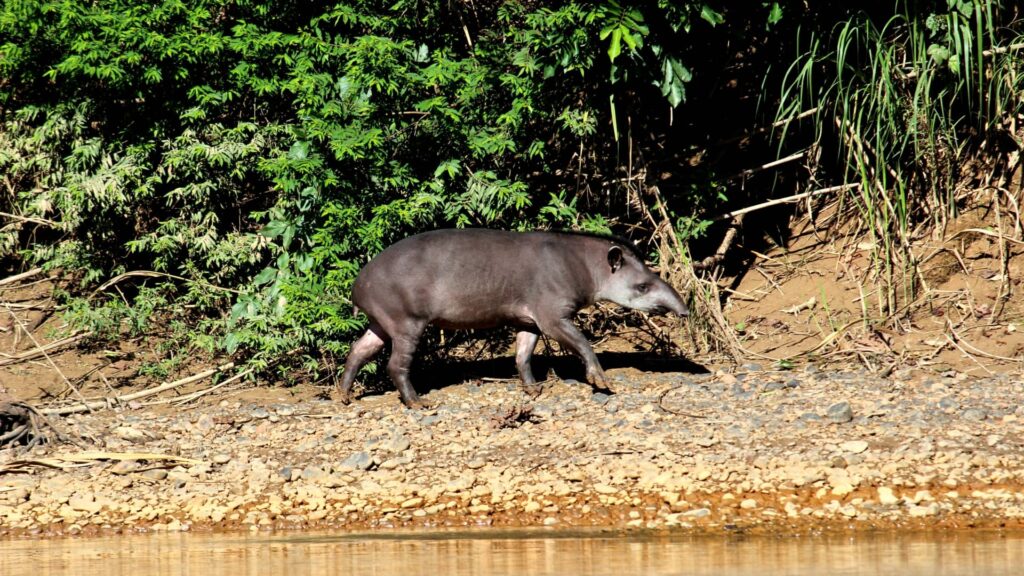
Today’s route will take us downstream along the Manu River, heading toward the Limonal ranger station the same location where, just a couple of days ago, we completed our official entry registration. Although this marks our departure route, the experience remains just as exciting and full of wildlife-viewing opportunities, including the always special chance of encountering a jaguar resting or moving along the riverbanks. As in any water-associated ecosystem, this stretch attracts a remarkable diversity of animals and birds. During our navigation, we may observe white and black caimans, capybaras, peccaries, and Howler Monkeys visiting the clay banks along the river, where they obtain essential minerals that help balance their diet, a natural form of “medicine” in the rainforest. These same areas also attract predators such as hawks, falcons, and eagles, ever alert for hunting opportunities. The rainforest is the result of an intense and dynamic coexistence among species, often at the edge of survival, and we will have the privilege of witnessing this natural balance firsthand. After officially exiting Manu National Park, we will continue navigating along the Madre de Dios River toward our next destination: Manu Birding Lodge.       From there, we will have the option of a night visit to a tapir clay lick, a place where these impressive rainforest mammals gather after dark to consume minerals and balance their diet. Waiting quietly and, with a bit of luck, observing them in their natural habitat will be an exciting and memorable experience. After this activity, we will return to the lodge to rest in our rooms.
06 DÍA 6: MANU BIRDING LODGE -COLLPA BLANQUILLO MANU BIRDING LODGE
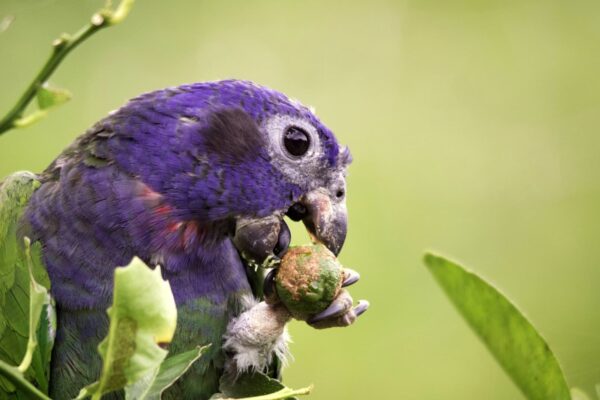
We will depart very early from our lodge toward to Blanquillo Parrot Clay Lick, located about forty-five minutes away by motorized boat. The early departure is essential, as the smaller parrots—mostly green species—descend at dawn to feed on the mineral-rich clay that helps balance their diet. Before landing, they engage in a careful vigilance behavior, circling the clay wall amid a chorus of calls, creating an unforgettable visual and acoustic spectacle. In this setting, taking photographs and videos becomes almost inevitable as we watch in fascination, coffee in hand—perhaps the best breakfast one could imagine, not because of the menu, but because of the moment and the place. After this first activity, we will wait for the arrival of the Red-and-green Macaws (Ara chloropterus), the largest macaws in Peru. Gradually, they will gather in the surrounding trees until, once they feel secure, they begin to descend to the clay wall. From our seats, we will enjoy watching this true celebration of color unfold before us, always in an atmosphere of caution and alertness. A single alarm call is enough for them all to take flight at once, gifting us that iconic multicolored scene so often seen in photographs, but experiencing it in person is simply incomparable. Following this experience, we will return to the lodge for lunch and a well-deserved rest. In the afternoon, we will resume our activities with a visit to the lodge’s hummingbird garden, where we may observe the famous and tiny Butterfly Coquette (hummingbird), a winged jewel that captivates with its size and delicacy. Later, we will take a walk along one of the area’s forest trails, a route that always offers surprises and new encounters with wildlife, before returning to the lodge for dinner and rest.
07 DÍA 7: MANU BIRDING LODGE – BOCA COLORADO - CUSCO
Today marks the final day of our journey. These have been six intense and inspiring days—days that will undoubtedly leave a lasting mark on our lives. We depart with profound experiences and a deeper understanding of the rainforest within Manu National Park, one of the most extraordinary natural areas on the planet. On this final stretch, we will travel by boat for approximately two and a half hours until reaching the mining settlement of Boca Colorado. Here, the contrast is evident: the pristine beauty of the rainforest begins to show the impact of partially illegal mining, a reality that invites reflection. At this point, we will bid farewell to our boat captain and his assistant, who worked tirelessly to make this journey safe and memorable. From Boca Colorado, we will continue by road in a land vehicle, traveling along an unpaved road to the village of Puerto Punkiri. There, we will once again board a motorboat for a short ride of approximately fifteen minutes, taking us to the Port of Santa Rosa. In Santa Rosa, our vehicle will be waiting to take us back to the city of Cusco. The return journey will offer even more unforgettable landscapes. Along the way, we will enjoy impressive views of Mount Ausangate, the highest peak in southern Peru, as well as a succession of Andean scenery that provides the perfect closing to this remarkable journey between the Amazon and the Andes. End of services.

What's Included

  • All transportation services (vehicles and boats)
  • All accommodation at lodges (basic but comfortable)
  • All meals (including mid-morning snacks)
  • Drinking water during the tour
  • Professional bilingual naturalist guide

Not Included

  • Breakfast on the first day
  • Drinking water on the first day
  • Soft drinks and/or beer
  • Anything not specifically mentioned in the program
  • Dinner on the last day

Frequently Asked Questions

01 How physically demanding is this tour?

The tour is classified as moderate difficulty. It does not require extremely demanding high-mountain treks, but it involves long periods of boat travel and walking on rainforest trails that can be wet or slippery. The main challenges are usually the tropical climate (heat and humidity) and the altitude changes on the first day.

02 Is it possible to see jaguars during the trip?

While the jaguar is an unpredictable and solitary animal, this itinerary significantly increases your chances by navigating the Manu River (Days 3 and 5). This area is world-famous because jaguars often rest on the riverbanks. However, sightings depend on luck and patience.

03 Why do I need to bring cold-weather clothing if I am going to the jungle?

On Day 1, the journey begins in the Andes (Cusco) and crosses the Acjanaco pass at nearly 4,000 meters (13,123 ft). Temperatures in this area can drop drastically. Additionally, the jungle can experience "friajes" (cold fronts from the south) that lower the temperature unexpectedly, so a light jacket is always necessary.

04 What kind of accommodation will I find at "Casa Machiguenga"?

Accommodation in the Reserved Zone is rustic yet comfortable. Casa Machiguenga is a lodge managed by the local community; it features basic rooms protected by mosquito netting and shared facilities. The goal is to minimize environmental impact and offer a total immersion experience in nature.

05 Is there internet signal or electricity during the tour?

Cell phone and internet signal are non-existent for most of the trip, especially from Day 2 onwards. Regarding electricity, some lodges use solar panels to charge cameras or batteries during specific hours (usually a couple of hours at night), so it is essential to bring a power bank.